The Mediterranean diet is one of the few eating patterns that manages to be both endlessly recommended and widely misunderstood. It regularly tops “best diet” rankings, yet many people who try it for weight loss come away disappointed — because they expected the food itself to do the work. The reality is more nuanced, and a good deal more useful once you understand it.
This guide looks honestly at what the Mediterranean diet is, what the research actually shows about weight loss, how much it costs to eat this way in the UK, and how to follow it in practice. The headline, which we will keep coming back to, is simple: the Mediterranean diet is a genuinely excellent way to eat — but it helps you lose weight mainly when you use it to build a calorie deficit, not by magic.
What is the Mediterranean diet?
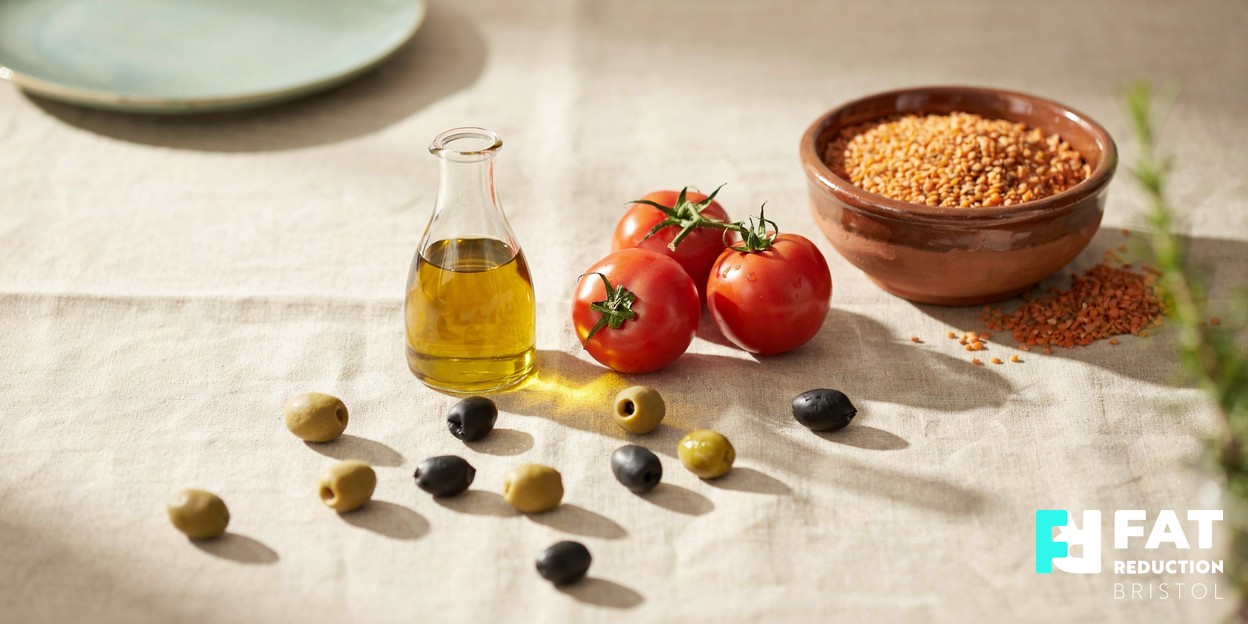
The Mediterranean diet (often shortened to MedDiet) is modelled on the traditional eating habits of Southern European countries — chiefly Greece, Italy and Spain. Rather than a fixed set of rules, it describes a broad pattern:
- High in vegetables, legumes (beans, lentils, chickpeas), fruit, nuts, whole grains, and olive oil as the main fat
- Moderate in fish and seafood (at least twice a week), poultry, eggs and dairy
- Low in red meat, processed meat and added sugar
- Optional moderate red wine with meals
Here is a detail that changes everything about how you should read the weight-loss claims: the Mediterranean diet was never designed as a weight-loss diet. It began as a description of how populations with unusually low rates of heart disease happened to eat. Weight loss is a possible side benefit, not the original purpose — and that distinction matters when you look at the evidence.
Does it actually cause weight loss? What the evidence shows
The short version is that the Mediterranean diet can support weight loss, the effect is modest, and it hinges on calories.
A comprehensive 2024 systematic review and meta-analysis pooling 26 randomised trials (more than 10,000 participants) found the MedDiet significantly reduced BMI by about 0.6 kg/m² and waist circumference by roughly 2.5 cm, alongside improvements in triglycerides and fatty liver markers. Those are real but modest changes — and the same review was candid that the quality of evidence was low, with around 85% of the trials carrying some risk of bias. So we should hold the numbers loosely.
Head-to-head comparisons are more revealing. A review of five longer trials (12 months or more) found the Mediterranean diet produced greater weight loss than low-fat diets — in the range of 4 to 10 kg versus roughly 3 to 5 kg — but produced similar weight loss to low-carbohydrate diets. In other words, it beats the dated low-fat approach of the 1990s, but it does not outperform other sensible whole-food diets.
The single most important finding across the research is this: the Mediterranean diet’s weight-loss effect depends “more on energy content than macronutrient composition.” Calorie restriction is the real driver. An unrestricted Mediterranean diet produced almost no weight change in the large PREDIMED trial.
That last point deserves emphasis. When researchers ran an energy-reduced Mediterranean diet alongside physical activity in the PREDIMED-Plus trial (over 1,500 people, three years), it significantly reduced total body fat and visceral fat — the deeper abdominal fat linked to health risk — while helping preserve lean muscle. The same foods, eaten without any calorie limit, barely moved the scales. The framework is excellent; the deficit is what does the work.
Typical weight-loss outcomes
| Approach | Typical weight loss | Timeframe |
|---|---|---|
| Ad-libitum MedDiet (no calorie limit) | −0.4 to −0.8 kg | Several years |
| Energy-restricted MedDiet | −4.1 to −10.1 kg | 12–24 months |
| MedDiet plus physical activity | ~7–10 kg fat mass | 3 years |
| MedDiet vs. low-fat, head-to-head | ~1–2 kg superior | 12+ months |
The pattern is consistent: put a calorie deficit inside the Mediterranean framework and you get meaningful, sustainable results. Leave calories unmanaged and the diet mostly delivers its cardiovascular and metabolic benefits rather than fat loss.
Is it affordable in the UK?
The Mediterranean diet has a reputation for being expensive, conjuring images of imported olive oil and fresh sea bass. The evidence pushes back on that. A UK cost study found that eating in high adherence to the pattern cost only about 20p a day more than low adherence — around 5% extra — and even that gap was partly explained by swapping away from meat and processed foods, which are pricier per portion.
The foundations of this way of eating are some of the cheapest, most nutritious items in any UK supermarket:
| Ingredient | Approximate UK cost | Notes |
|---|---|---|
| Tinned chickpeas or kidney beans | Under £1 a tin | Protein and fibre staple |
| Dried red lentils (500g) | About 75p | Cheaper than meat protein |
| Own-brand extra-virgin olive oil | ~£3–4 per 500ml | Budget versions are functionally identical |
| Tinned sardines or mackerel | ~£1 a tin | Low-cost omega-3 source |
| Frozen white fish (1kg) | ~£3–4 | Nutritionally equivalent to fresh |
| Brown rice / whole-wheat pasta | ~£1–2 a bag | Staple carbohydrates |
A few practical tips for UK shoppers: budget supermarkets such as Aldi and Lidl, and local Middle Eastern or Asian grocers, carry these staples cheaply; buy dried pulses in bulk; avoid pre-cut vegetables, which carry a large premium; and use the freezer aisle freely, since frozen fish and vegetables are nutritionally on par with fresh. UK weather makes fresh tomatoes and fish costly, but tinned tomatoes and tinned or frozen fish are perfectly authentic here.
How to follow it in practice
You do not need a rigid plan — the Mediterranean diet is a pattern, not a prescription. A simple daily structure works well:
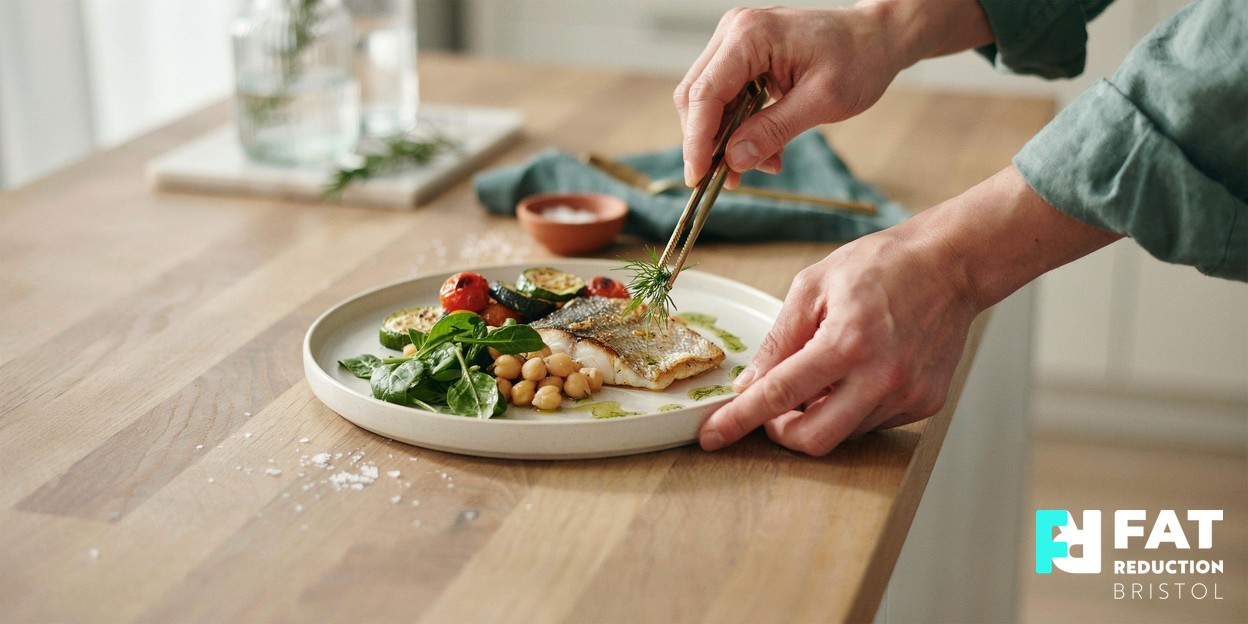
- Fill half your plate with vegetables — fresh, frozen or tinned all count
- Make about a third carbohydrates: wholegrain bread, brown rice, whole-wheat pasta, or potatoes with their skins
- Get protein mainly from fish (two-plus portions a week, one oily), eggs, pulses and small amounts of chicken
- Use olive oil as your main fat and skip butter in cooking
- Keep red meat to two or three times a week at most, and avoid processed meat
- Snack on fruit and a small handful of unsalted nuts
- Cook from scratch where you can — most Mediterranean dishes are one-pot or simple assembly
Some easy UK-friendly meals: Greek yogurt with berries and walnuts for breakfast; lentil soup with wholegrain bread, or tinned sardines on toast with rocket, for lunch; baked salmon with roasted vegetables and brown rice, or a chickpea and tomato stew, for dinner; and hummus with raw veg, olives or fruit to snack on.
Honest limitations
To keep this balanced, the caveats matter as much as the benefits:
- It is not a fast fix. Without calorie restriction, weight loss is minimal. Its real strength is long-term metabolic health and weight maintenance.
- The evidence is moderate at best. Most trials are short and carry methodological concerns.
- There is no single official definition, which makes comparisons tricky and lets marketers label almost anything “Mediterranean”.
- It is no better than other whole-food diets for weight loss — only clearly better than the old low-fat approach.
- Habits take real effort to change. UK eating culture is meat-centred, so this is genuine dietary re-education, not just a swap of ingredients.
If you want to compare approaches, our guides to high-protein diets for fat loss and low-calorie versus low-carb versus low-fat put the Mediterranean diet in context — and the common thread across all of them is that a sustainable calorie deficit, not the label, is what drives fat loss.
Where diet ends and body contouring begins
A stable, healthy diet like this one is the proper foundation for any body-shaping goal — and for many people it is all they need. But even at a comfortable weight, some fat deposits stay stubbornly put. Diet reduces fat across the whole body; it cannot be steered towards one area, which is why persistent pinchable pockets often remain, as we explore in how to lose stubborn belly fat.
That is the point where non-surgical body contouring can play a supporting role. Treatments such as fat freezing work to refine a specific, stubborn area once your weight is stable — they are contouring tools, not weight-loss shortcuts, and they work best alongside a settled, healthy way of eating rather than instead of one.
The bottom line
The Mediterranean diet is one of the best-evidenced, most enjoyable and most affordable ways to eat for long-term health. For weight loss it is a strong, sustainable framework — provided you use it to create a modest calorie deficit and pair it with some activity. It will not melt fat on its own, and it is not uniquely powerful compared with other whole-food diets, but few ways of eating are as easy to live with for good.
If you have reached a stable, healthy weight through eating well and there is still an area that will not shift, you are welcome to book a consultation with the team at Fat Reduction Bristol. We will look at the area, talk through realistic options, and give you an honest view of whether non-surgical body contouring could help — always as a complement to a healthy diet, never a replacement for one.
Pros & Cons
Pros
- One of the most studied and heart-healthy ways of eating, built on whole foods rather than restriction or gimmicks
- Outperforms the old-style low-fat diet for weight loss and is highly sustainable long term
- Genuinely affordable in the UK — pulses, tinned fish, frozen veg and own-brand olive oil cost very little
Cons
- It is not a fast weight-loss plan — without a calorie deficit, weight change is minimal
- The weight-loss evidence is only moderate quality, and it is no better than other whole-food diets
- Adapting UK, meat-centred eating habits takes a real behaviour change, not just a shopping-list swap
Frequently Asked Questions
Will I lose weight just by switching to the Mediterranean diet?
Not necessarily, and not quickly. The clearest finding from the research is that the Mediterranean diet's weight-loss effect depends far more on how many calories you eat than on the specific foods. When people follow it without any calorie restriction, weight change tends to be very small — often under a kilogram over several years. Paired with a modest calorie deficit and some activity, the same way of eating can produce meaningful, lasting fat loss. Think of it as an excellent framework to build a calorie deficit around, not an automatic one.
How much weight can I realistically expect to lose?
It depends heavily on whether you restrict calories. In trials where the diet was energy-reduced, people lost roughly 4 to 10 kg over 12 to 24 months. Combined with physical activity over three years, participants in one large study lost around 7 to 10 kg of fat mass while better preserving muscle. Followed with no calorie limit, average loss was under a kilogram. Everyone is different, so treat these as ranges rather than promises.
Is the Mediterranean diet expensive in the UK?
Less than its reputation suggests. A UK cost study found high adherence added only about 20p a day compared with low adherence — roughly 5 percent more — largely because you swap meat and processed food for cheaper pulses and grains. Tinned chickpeas, dried lentils, tinned sardines, frozen fish and own-brand olive oil from budget supermarkets keep costs low. Avoiding pre-cut veg and buying dried pulses in bulk helps further.
Is it better than low-carb or other diets?
For weight loss specifically, the honest answer is: about the same. The Mediterranean diet clearly beats the old-fashioned low-fat diet, but head-to-head it produces similar weight loss to low-carbohydrate and other whole-food patterns. Its real edge is long-term heart and metabolic health, plus how sustainable and enjoyable most people find it. The best diet for you is largely the one you can actually stick to.
Can it help with stubborn areas like belly fat?
An energy-reduced Mediterranean diet with activity has been shown to reduce visceral fat, the deeper fat around the abdomen linked to health risk. But no diet lets you target one specific area, and stubborn pinchable pockets often persist even at a healthy weight. That is where non-surgical body contouring can help once your weight is stable — it refines a specific area rather than replacing overall fat loss.